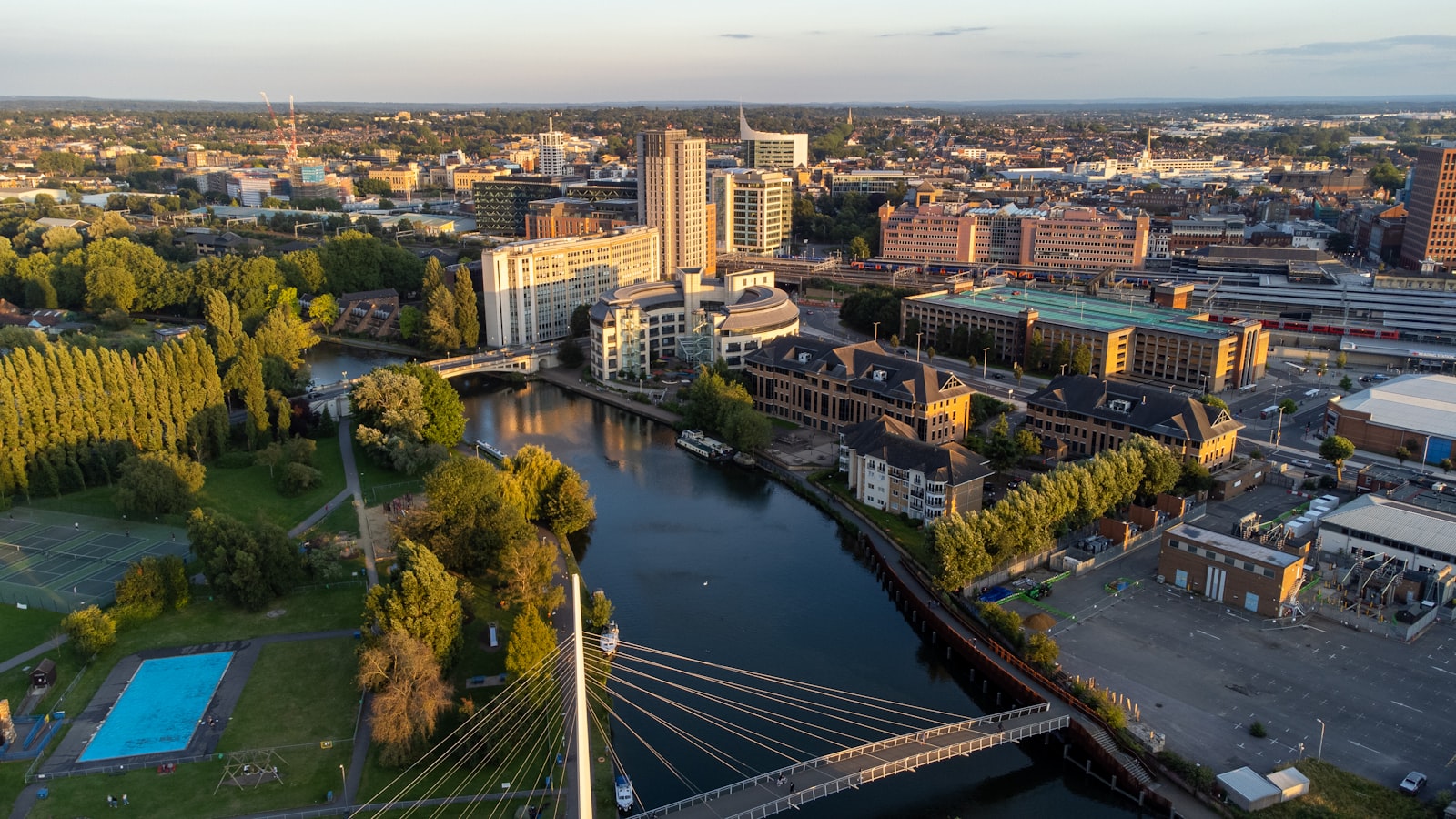
Reading is bigger than Newcastle. It's bigger than Nottingham, bigger than Aberdeen, and roughly a hundred and eighty times the size of St Davids in Pembrokeshire.
St Davids is a city. Reading isn't.
Four attempts, four rejections
Reading has entered the civic honours competition repeatedly: 2000, 2002, 2012 and 2022. It lost every time. In 2022 it was one of 39 places that applied, and the winners were Doncaster, Milton Keynes, Colchester, Southend-on-Sea, Wrexham, Dunfermline and Bangor in County Down. The local paper called the result a travesty.
The judging criteria are published, and they are not about size. The Cabinet Office's entry guidelines asked places to make a case about their civic identity, notable features and royal associations.
Milton Keynes was a set of villages until 1967. Reading has been a town since the eighth century, was recorded in Domesday, and had an abbey where Henry I is buried.
None of that counts, because none of it is what's being judged.
There is no threshold to meet
Here's the thing people get wrong about city status. It isn't a rank you achieve by growing. It's a gift, given by the monarch through letters patent, and the criteria have shifted over the centuries depending on who was handing it out and why.
The old rule was a cathedral, which is how tiny places like Wells and Ely got in and stayed in. The modern rule is essentially a competition entry, judged on the case a place makes about its identity and civic pride. Recent rounds have deliberately favoured places that hadn't been recognised before, which works against a town that has applied four times.
So a place can be large, old, prosperous and well connected, and still lose to a new town in Buckinghamshire. That's not a flaw in the process from the Crown's perspective. Handing out honours is the point.
Does it actually matter?
Practically, no. City status brings no funding, no extra powers, no change to how a council works. Reading Borough Council would do exactly what it does now.
What it brings is a label, and labels turn out to matter to people. Councils spend real money on these bids because the title shows up in every prospectus, every investment pitch and every sign on the ring road. Wrexham's 2022 win made national news.
The phone network made its own judgement years ago. Reading holds 0118, one of only 12 three-digit dialling codes in the UK. The other 11 belong to Leeds, Sheffield, Nottingham, Leicester, Bristol, Birmingham, Edinburgh, Glasgow, Liverpool, Manchester and Tyneside. Every one of them is a city. By the measure that allocates actual infrastructure, Reading joined the big league in 1998.
There's a smaller irony too. Because "town" has no legal definition in the UK at all, while "city" has a very precise one, Reading's status is defined entirely by what it lacks.
Where Reading actually ranks
On our count Reading is the 2nd largest town in the UK, with 318,014 residents. You can see it in context on the largest towns list, alongside Northampton, Luton and the other big places that have never been made cities.
Or look at the 76 official cities and count how many are smaller. It's most of them.