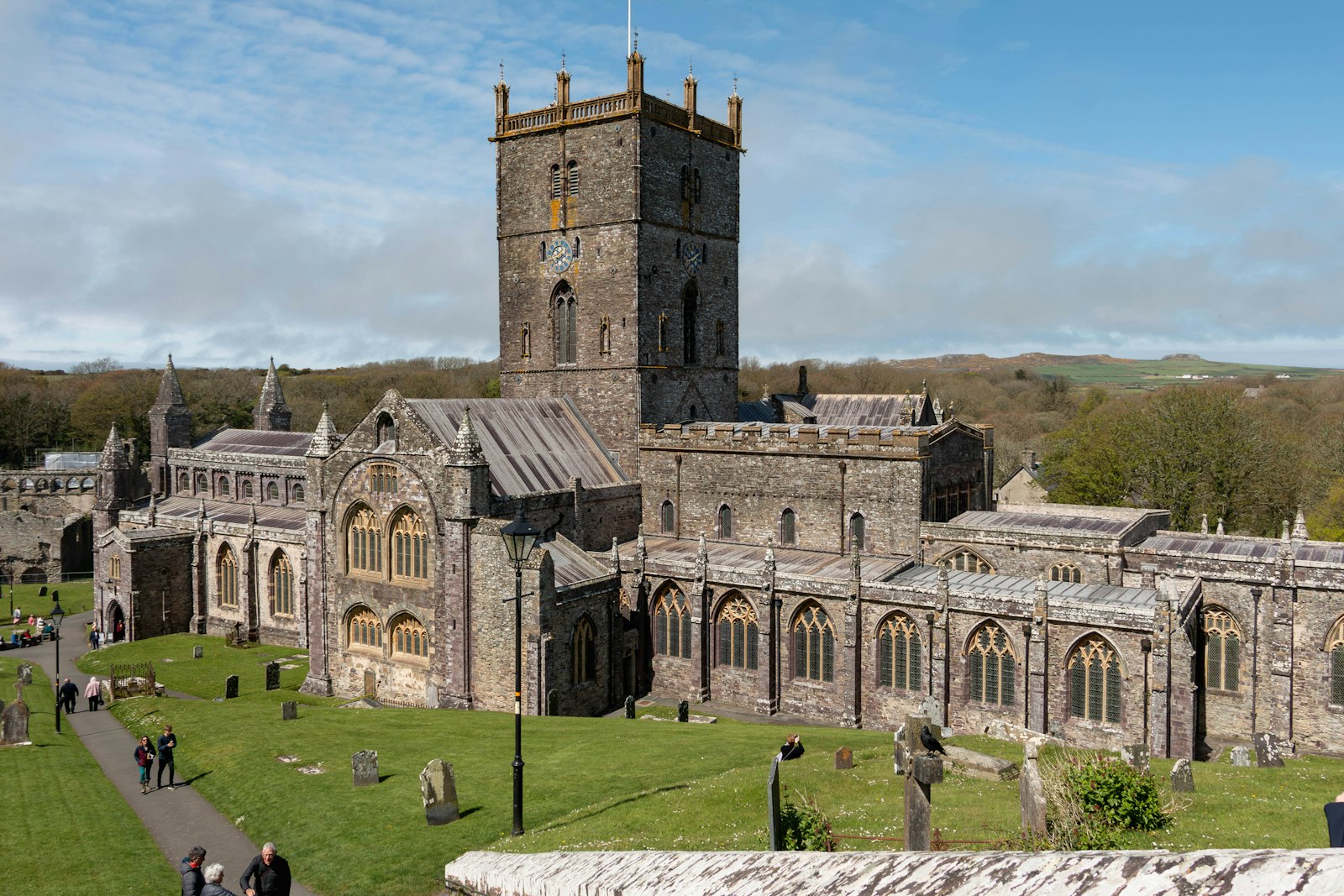
St Davids sits at the end of a Pembrokeshire peninsula, has 1,751 residents, one cathedral, and no traffic lights. It's a city.
Reading has more than 300,000 people, two railway stations and a university. It isn't.
That's not an anomaly in the system. It is the system. City status in the UK has never had anything to do with size.
How a place becomes a city
The monarch grants it, by letters patent. There's no population threshold, no application scoring matrix, no automatic promotion when a town passes some number. A place is a city when the Crown says so, and not before.
For centuries the rough rule was a cathedral. That's why St Davids qualifies: it's been a site of pilgrimage since the sixth century, and its cathedral is the reason anyone goes. The town lost its city status in 1886 on a technicality of local government reform, then spent a century asking for it back. It got it in 1994.
These days the grants come in batches, usually to mark a royal occasion. Seven places in the UK were made cities for the 2022 Platinum Jubilee (an eighth, Douglas, is on the Isle of Man): Southend-on-Sea, Milton Keynes, Colchester, Doncaster, Wrexham, Bangor, Dunfermline.
The five smallest
By resident population, these are the smallest cities in the United Kingdom:
| # | City | Nation | Population |
|---|---|---|---|
| 1 | St Davids | Wales | 1,751 |
| 2 | St Asaph | Wales | 3,485 |
| 3 | City of London | England | 8,072 |
| 4 | Wells | England | 11,145 |
| 5 | Armagh | Northern Ireland | 14,801 |
The City of London is the strange one. Its 8,072 residents make it third smallest by population, but at 1.12 square miles it's the smallest of all by area. Roughly half a million people work there and almost nobody lives there, which is what happens when an entire district turns into offices.
Why the lists disagree
Search for the smallest UK city and you'll get several different answers, confidently stated. The disagreement is usually about geography rather than arithmetic.
St Davids has 1,751 residents if you count the community, which is the Welsh equivalent of a parish. Count only the built-up bit around the cathedral and it's smaller. Count the wider ward and it's larger. Every published figure is somebody's boundary choice, and most sources don't say which one they used.
We use the 2021 census community figure for St Davids and St Asaph, because both are below the threshold of our main data source. Every other city on the list uses the populated place. It's stated on the cities page too, because a number without its definition isn't much use.
The full list
There are exactly 76 cities in the UK: 55 in England, 8 in Scotland, 7 in Wales and 6 in Northern Ireland. You can see all of them ranked by population, from Birmingham down to St Davids.
And if you want the opposite view, the largest towns without city status is where places like Reading end up. Some of them are bigger than two thirds of the cities.